
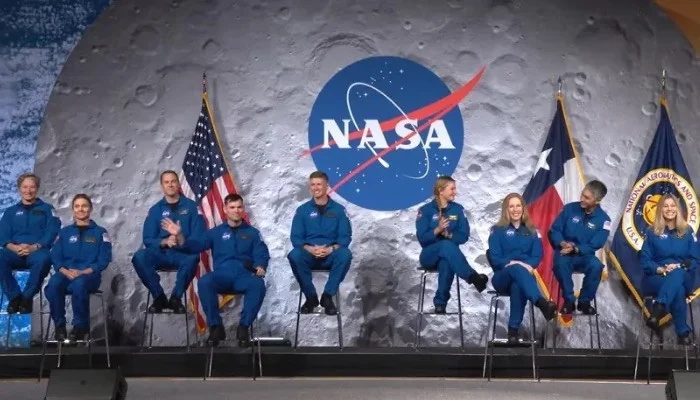
NASA is now accepting applications for its next class of astronauts, seeking explorers to help write "the next chapter of human spaceflight" as the agency returns to the Moon, builds a lunar base, and lays the groundwork for crewed missions to Mars.
Applications opened on November 7 and close at 11:59 p.m. NASA expects to make final selections in late 2027, when the chosen candidates will start roughly two years of training at the Johnson Space Center in Houston. The new group will be NASA's 25th astronaut class.
NASA Administrator Jared Isaacman said: "This is an extraordinary time to join NASA's astronaut corps. The people we select could walk on the Moon, live and work at the Moon Base, and help pioneer the systems and operations that will ultimately carry crews to Mars." The agency last opened applications in 2024, drawing more than 8,000 applicants; only 10 were selected and are currently completing training.
NASA has 32 active astronauts and has selected 370 people since the 1960s. Officials say more are needed as missions grow more ambitious.
Basic requirements include U.S. citizenship and a master's degree in a STEM field, though several alternatives are accepted, including two years toward a doctoral program, certain medical degrees, or completion of a nationally recognized Test Pilot School. Candidates also need at least three years of related professional experience, must pass NASA's long-duration flight physical, and must demonstrate strong leadership, teamwork, and communication skills.
Pilot applicants can qualify through specific flight hours. Selected candidates will train in spacewalking, lunar geology, robotic operations, and high-performance aircraft.
NASA plans to send astronauts to the lunar South Pole under the Artemis program, establish an enduring lunar presence, and build toward the first crewed Mars mission. The agency emphasizes that this recruitment drive is vital for maintaining the momentum of deep-space exploration.
With the private sector also expanding, NASA remains the primary gateway for government-led lunar and Martian scientific research. The salary for these positions starts at approximately $164,000 per year, reflecting the high level of expertise and the rigorous nature of the work involved.
Interested candidates are encouraged to review the full list of medical and psychological requirements on the official NASA portal before submitting their documentation. The selection process is notoriously competitive, often spanning several months of interviews and evaluations.
As the agency looks toward the future, the integration of new technology and international partnerships remains a cornerstone of its strategy. The 25th class will be instrumental in ensuring that the United States maintains its leadership in space exploration for decades to come.
Whether it is testing new life-support systems or conducting experiments in microgravity, the new recruits will be at the forefront of human discovery.