
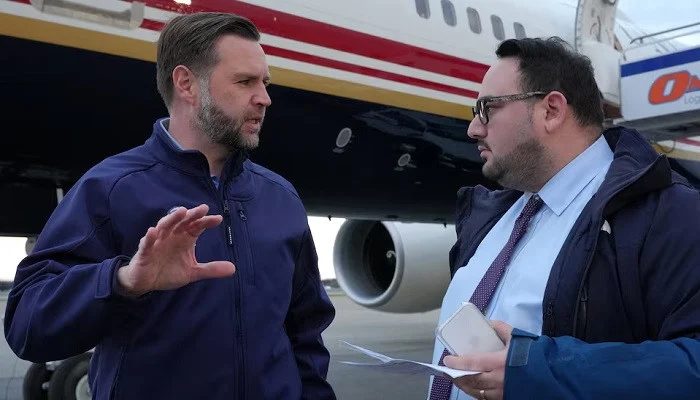
US Vice President JD Vance said in Washington that the United States will maintain pressure on Iran until Tehran takes concrete measures to stop the rebuilding of its nuclear programme, and that Washington rejects promises in place of action. "The goal here is to prevent the Iranians from having a nuclear weapon, and really to prevent regional nuclear proliferation," Vance said during an exclusive interview.
He said Iran's nuclear and enrichment facilities have been destroyed, and that the United States will ensure Tehran cannot rebuild those sites or restore its nuclear capacity. "That's fundamentally the goal here, and everything else that's happening, from them terrorising shipping to our response to that, is really a subplot of the much bigger goal of keeping them from having a nuclear weapon," he added.
He accused Iran of attempting to use attacks on commercial shipping to pressure Washington and disrupt the global economy, and said the strategy is backfiring. "Every time they try to cause damage to the world economy, they end up causing much greater damage to themselves," Vance stated.
He said Washington remains willing to reach an agreement with Tehran, but that any deal requires concrete Iranian action rather than mere assurances. "What the president has said is, you know, look, from the very beginning, we're willing to strike an agreement where the Iranians commit to not rebuilding their nuclear program and take real steps in order to do that, but it takes two to tango, and we're not going to trade words for actions," Vance explained.
"In other words, the United States is not going to do things for mere promise of actions on the Iranian side. We need to trade actions for actions here, and we'll see what the Iranians do," he said.
Vance questioned Tehran's continued enrichment of uranium to 60 percent, which he said is unnecessary for energy production. "If you don't want a nuclear weapon, then why do you need 60% enriched fuel?" he asked, adding that 60 percent enriched uranium is not needed for anything except threshold weapons-grade material.
He said Washington is engaging Iran's political leadership, including its foreign minister, but that the United States is uncertain how decisions are made inside Tehran. He said some people in Iran want an agreement while others try to sabotage a deal, that he is involved in the talks, and that President Donald Trump is ultimately directing the process and setting the objectives.
Vance said the United States also aims to prevent a wider nuclear arms race, because an Iranian nuclear weapon could prompt other regional countries to seek their own. "So, you know, you don't want the world's largest state sponsor of terrorism to have a nuclear weapon.
You also don't want to radically increase the number of nuclear weapons in the world," he stated. He declined to discuss classified intelligence on reports of a potential Iranian operation against the US-linked RAF Fairford air base in Britain, and said Washington is aware of Iranian efforts to target American assets globally.
"I'm not going to speak to classified intelligence. Nothing has happened yet.
We're very aware that the Iranians are trying to conduct strikes against American assets all over the world," Vance concluded.