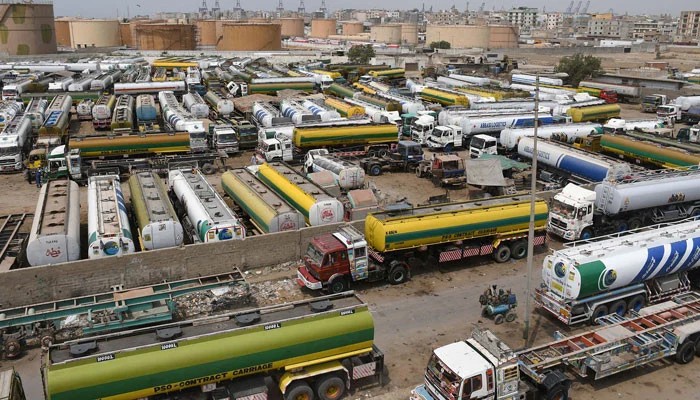
Inflationary pressures have intensified ahead of the central bank's monetary policy meeting on September 14, with rising petroleum costs and exchange-rate pressures posing risks to the inflation outlook, the Institute of Cost and Management Accountants of Pakistan (ICMA) said in a pre-monetary-policy report on Saturday. The policy rate stands at 11.5 per cent, while consumer inflation accelerated to 11.1 per cent year-on-year in August from 9.2 per cent in July. Core inflation also picked up, reaching 8.8 per cent in urban areas and 8.5 per cent in rural areas, the report said.
ICMA's analysis shows that petroleum import movements have historically preceded headline inflation at three-to-nine-month horizons, particularly during 2022-23, reflecting transmission through transportation, production, and distribution costs. Core inflation displayed similar lagged effects, underscoring the risk of second-round impacts. Exchange-rate movements also preceded headline and core inflation during significant periods, though the relationship was not uniform, reversing between July 2025 and January 2026 when inflation itself led the exchange rate.
The report emphasises that petroleum costs and rupee depreciation together amplify domestic energy costs, making them critical signals for policymakers. With headline inflation rising in August, ICMA stresses the importance of distinguishing between temporary shocks, such as fuel price spikes, and persistent underlying inflation that spreads into non-energy goods and services.
ICMA recommends a cautious wait-and-see approach, conditioning future rate cuts on sustained moderation in both urban and rural core inflation, accompanied by exchange-rate stability and the absence of renewed petroleum-related cost pressures. The report calls for clear communication to distinguish temporary headline spikes from persistent inflationary trends, the publication of external-risk scenarios to guide market expectations, and active management of exchange-rate volatility through adequate foreign-exchange buffers rather than defending a fixed rupee level.
In its latest economic signal, ICMA has identified Google's expanding presence in Pakistan as an opportunity to accelerate digital transformation, strengthen human capital, and build a stronger digital export ecosystem, noting that Pakistan's ICT export earnings rose significantly while young demographics provide a competitive digital workforce.